CPI App Install Campaigns are revolutionizing the way app developers, brands, and advertisers attract new users in the rapidly changing world of mobile marketing today. Getting high-quality installs at the lowest cost is your biggest challenge, regardless of whether you’re marketing an e-commerce platform, fintech app, or mobile game. However, should you stick with Regular App Install Campaigns provided by platforms such as Google Ads, Meta Ads, Apple Search Ads, or Google Play campaigns, or should you opt for Affiliate CPI App Install Campaigns?
This post will explain how CPI (Cost Per Install) models operate, the distinction between affiliate-driven installs and conventional campaigns, their benefits and drawbacks, and which approach actually yields a higher return on investment.
What Are CPI App Install Campaigns?
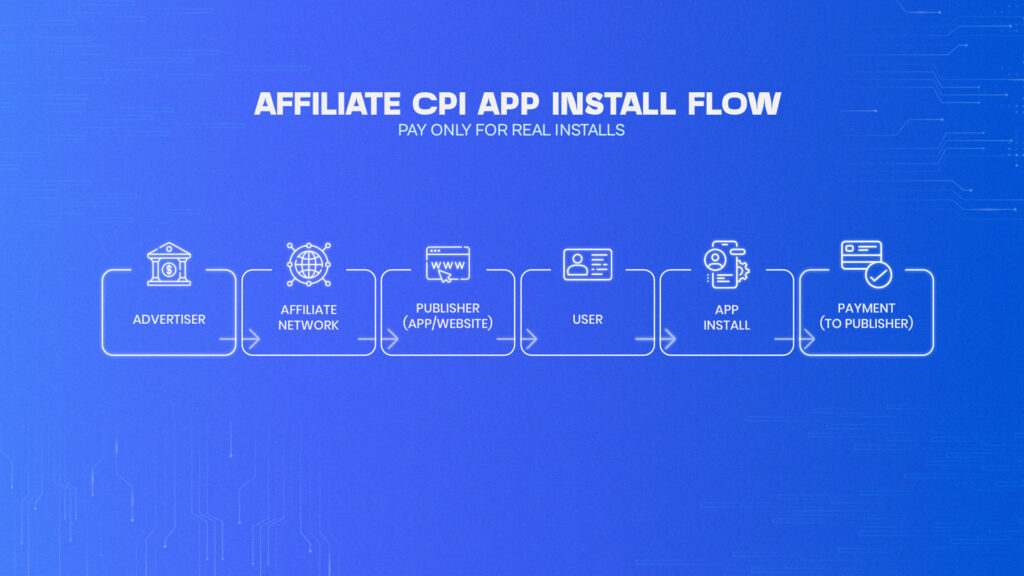
With a cost-per-install (CPI) app install campaign, advertisers only have to pay when a user successfully installs their app. One of the most effective strategies for mobile performance marketing is CPI, which guarantees payment only for actual installs, in contrast to CPM (cost per mille) or CPC (cost per click) models.
This strategy is now essential to both app user acquisition and mobile app marketing. Brands concentrate solely on acquiring verified users rather than spending money on traffic that might not convert; every dollar spent yields quantifiable growth.
According to the affiliate marketing model, these campaigns are driven by publishers, influencers, or third-party networks that advertise your app on blogs, ad networks, social media, and content platforms. Affiliates drive installs based on your CPI rate, which you simply specify (e.g., $0.50 or $1 per install).
The finest aspect? To ensure transparency and prevent fraud, attribution tools such as Appsflyer, Adjust, or Branch are used to track each install. With AI-based optimization and real-time tracking, affiliate app install campaigns in 2026 deliver scalable reach and precise targeting, perfect for brands aiming to expand user bases quickly and cost-effectively.
How Regular App Install Campaigns Work (Google, Meta, Apple, and Play Store)
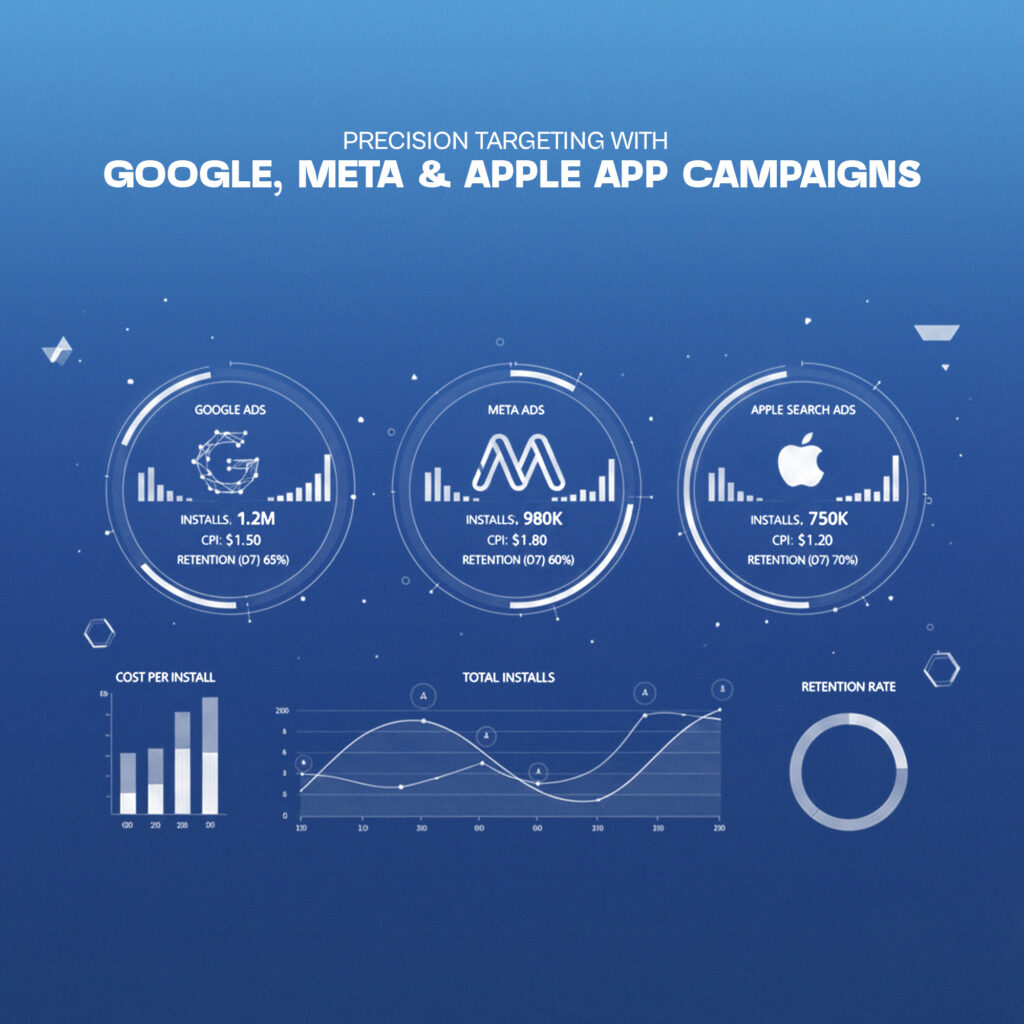
Unlike Affiliate CPI App Install Campaigns, which depend on third-party publishers or networks, Regular App Install Campaigns are run directly through major digital advertising platforms such as Google Ads, Meta Ads, Apple Search Ads, and the Google Play Store. These platforms give advertisers complete control over audience targeting, budget, creative strategy, and performance tracking, allowing brands to attract high-quality, engaged users rather than just install numbers.
Google Ads App Campaigns
Google’s App Campaigns automatically optimize your ads on Google Play, YouTube, Display Network, and Google Search using machine learning. Simply put, advertisers supply Google with text ideas, images, videos, and a budget. Google then experiments with different combinations to determine which ones produce the best results. By forecasting user intent, in-app engagement, and lifetime value, Google’s Performance Max for Apps in 2026 has further enhanced optimization and assisted brands in gaining valuable users who convert in addition to installs.
Meta App Install Ads
The extensive ecosystems of Facebook, Instagram, and Audience Network are utilized by Meta’s App Install Campaigns. Advertisers can connect with users who are most likely to download and use their apps by using precise demographic and behavioral targeting. Recent introductions of Meta’s Advantage+ App Campaigns automate budget distribution and creative testing, increasing conversions while decreasing manual setup. This makes Meta particularly useful for apps looking for socially driven installs in the gaming, lifestyle, and e-commerce categories.
Apple Search Ads
When users actively search for related apps, Apple Search Ads show up right in the App Store search results, which makes them special. Because users are already searching for apps similar to yours, they rank among the highest-intent acquisition channels. Apple’s platform comes with two options: Advanced (custom targeting by audience type, region, and keywords) and Basic (automated installs for smaller budgets). Apple’s new 2026 ad placements in the “Today” and “Suggested Apps” tabs have increased visibility and assisted brands in boosting both organic rankings and app store visibility at the same time.
Google Play Store Promotions
Promotions for Android apps in the Google Play Store target users who are looking for featured apps or related categories. These promotions, when paired with Google’s AI-powered discovery placements and App Store Optimization (ASO), assist developers in gaining both paid visibility and organic momentum.
The majority of these platforms charge advertisers using a CPC (Cost Per Click) or CPA (Cost Per Action) model, in which algorithms automatically optimize bids toward conversions, such as app installs, registrations, or purchases. Platforms make sure that campaigns are continuously improved to yield greater return on investment and improved user retention by examining user behavior, engagement history, and predictive intent.
Regular App Install Campaigns essentially give brands accuracy, openness, and long-term viability. Regular campaigns allow advertisers to monitor each click, impression, and post-install event from a single dashboard, in contrast to Affiliate CPI App Install Campaigns, where traffic sources are frequently unknown. By having direct control over creatives, audiences, and bidding tactics, marketers can create a more dependable and expandable app growth funnel.
CPI App Install Campaigns (Affiliate) vs Regular App Install Campaigns: Key Differences
| Feature | CPI App Install Campaigns (Affiliate) | Regular App Install Campaigns (Google/Meta/Apple) |
| Pricing Model | Cost per install (CPI) | Cost per click (CPC) / Cost per action (CPA) |
| Control | Limited (depends on affiliate) | Full advertiser control |
| Reach | Wide (multiple publishers, ad networks) | Platform-specific (Google, Meta, Apple) |
| Traffic Quality | Varies (depends on network & source) | Usually higher, platform-verified |
| Fraud Risk | Higher (if not verified) | Low (platforms verify installs) |
| Tracking Tools | 3rd party tracking (Appsflyer, Adjust) | Built-in analytics (Google Ads, Meta SDK) |
| Optimization | Based on volume & payout | Based on machine learning & algorithms |
| Best For | Scale, testing markets | Quality installs & ROAS optimization |
Advantages of CPI App Install Campaigns (Affiliate)
One of the cheapest and most scalable ways to expand your app is through CPI App Install Campaigns via affiliate networks. This is a true performance-based marketing model since you only pay when your app is successfully installed, not for clicks or impressions.
1. Only pay for actual installs.
Every dollar spent on CPI campaigns ensures a real outcome, such as an app install. For startups and app developers with tight budgets, this makes it ideal. The risk of wasting ad spend is low because you’re paying for performance. During launch periods, it’s also a fantastic method to increase early visibility and raise your app’s or Google Play’s rankings.
2. Massive Global Reach
You can reach thousands of publishers, ad partners, and influencers worldwide through affiliate CPI networks. Through in-app advertisements, blogs, social media, and mobile websites, your app is promoted to a wide range of global audiences. Without having to handle several ad platforms, this extensive distribution enables brands to acquire app users worldwide.
3. Speed and Scalability
Affiliate app install campaigns yield quick results when speed counts. Affiliates are particularly helpful during product launches, updates, or holiday promotions, as they can produce hundreds or even thousands of installs every day. Your app’s visibility and credibility in app store rankings are enhanced by this rapid volume.
4. Flexible Budget and Control
You can start small and scale according to performance because you set your own CPI rate, daily caps, and target regions. The majority of networks offer dashboard-level control, which guarantees complete flexibility and cost effectiveness by enabling you to pause, modify, or optimize campaigns in real time.
To put it briefly, Affiliate CPI App Install Campaigns give app marketers a dependable method of increasing installs at scale while keeping precise control over spending and results by combining reach, speed, and affordability.
Disadvantages of CPI App Install Campaigns (Affiliate)
While CPI App Install Campaigns are cost-effective and scalable, they also come with several challenges related to quality, control, and transparency.
1. Quality Concerns
High install numbers don’t always mean high engagement. Many affiliates chase volume over user quality, leading to low retention and poor lifetime value. This can hurt ROI, especially for apps that rely on repeat usage or in-app purchases.
2. Fraud and Bot Installs
Affiliate CPI campaigns are prone to ad fraud, fake installs from bots, click farms, or incentivized users. Without proper tracking tools like Appsflyer or Adjust, these fake installs can go unnoticed, wasting budget and skewing performance data.
3. Limited Targeting Control
Advertisers have less say over where or how their app is promoted. Affiliates choose their own channels, which can lead to mismatched audiences or irrelevant placements. This reduces targeting precision and overall campaign effectiveness.
4. Compliance and Brand Safety
Poor-quality affiliates sometimes use misleading creatives or non-compliant ads, putting your brand’s reputation at risk. To stay safe, work only with verified CPI networks and monitor campaign creatives regularly.
In short, affiliate app install campaigns offer fast growth but require careful tracking, strong anti-fraud tools, and strict quality checks to ensure real user acquisition and long-term value.
Advantages of Regular App Install Campaigns (Google, Meta, Apple)
Regular App Install Campaigns, run directly through Google Ads, Meta Ads (Facebook & Instagram), and Apple Search Ads, give advertisers more transparency, control, and precision compared to affiliate CPI app install campaigns. These platforms use AI-driven systems, real-time analytics, and verified tracking, making them ideal for brands that prioritize quality user acquisition and long-term ROI.
1. Better Targeting & Machine Learning Optimization
Platforms like Google and Meta use powerful machine learning algorithms to analyze user data such as interests, demographics, app usage, and behavior patterns. This allows your campaigns to automatically reach audiences who are most likely to install and engage with your app.
For example, Google’s App Campaigns optimize across Search, Display, YouTube, and Play Store listings to maximize installs, while Meta leverages signals from user activity on Facebook and Instagram to find high-value prospects. The result? Smarter targeting, higher install rates, and better retention.
2. Transparent Analytics
With Regular App Install Campaigns, advertisers get real-time, transparent analytics directly from the platform dashboards. You can monitor impressions, clicks, installs, user retention, and even in-app events like purchases or sign-ups.
This level of visibility allows marketers to make data-driven decisions, refine ad creatives, and reallocate budgets based on actual performance. For businesses focused on scalability and optimization, this transparency gives a clear advantage over affiliate-based CPI campaigns.
3. High-Quality Users
Unlike affiliate traffic, users acquired from Apple Search Ads or Google Play Campaigns tend to have high intent. These are users actively searching for similar apps or categories, meaning they’re already interested in what your app offers.
For example, an e-learning app ad appearing in response to “best study apps” on the App Store is reaching a user who’s already looking to download something relevant, resulting in higher engagement and retention rates.
4. Fraud Protection
Major ad platforms have built-in fraud detection and verification systems that validate every install through official app stores or SDK integrations. This significantly reduces the risk of fake installs, bot traffic, or click manipulation, issues that often plague affiliate CPI campaigns.
Because installs are verified directly through Google Play or the App Store, advertisers can trust that their spend goes toward real, verified users, not bots or device farms.
Disadvantages of Regular App Install Campaigns
While Regular App Install Campaigns deliver higher quality and transparency, they also come with their own set of challenges, especially for smaller developers or those new to mobile app marketing.
1. Higher Cost Per Install
Premium platforms like Google Ads and Meta Ads charge more due to the quality and reliability of their traffic. Depending on your niche, CPIs can be 2–3x higher than those from affiliate networks. While this results in better users, it can stretch marketing budgets, especially during competitive seasons or for global targeting.
2. Learning Curve
Setting up optimized app install campaigns on these platforms requires understanding of bidding strategies, creative testing, attribution tracking, and conversion optimization. For beginners, this learning curve can be steep, leading to mistakes or underperforming campaigns if not managed carefully.
Many brands now rely on AI automation tools or mobile marketing agencies to manage and optimize their campaigns effectively.
3. Budget Burn Without Results
Even with advanced targeting, poor campaign setup or weak creatives can cause budgets to drain quickly. For example, if your audience targeting or event tracking isn’t properly configured, you might pay for clicks that don’t convert to installs.
To avoid this, brands should regularly analyze campaign data, A/B test creatives, and monitor key metrics like CPI, CPA, and retention rate to ensure continuous improvement.
In short, Regular App Install Campaigns offer precision, trust, and measurable performance, ideal for brands seeking sustainable app user acquisition rather than quick bursts of volume. However, success depends on strategic setup, optimization, and continuous data analysis to make every install count.
CPI App Install Campaigns vs Regular Campaigns: Which Performs Better in 2026?
In 2026, both models have evolved. Affiliate CPI campaigns have become smarter, integrating with fraud detection tools, attribution tracking (Adjust, Branch, Appsflyer), and AI-driven traffic scoring. Meanwhile, Google and Meta campaigns have improved with predictive analytics, Smart Bidding, and deep learning-based optimization.
If your goal is scaling installs fast at low cost, CPI affiliate campaigns still win. But if your priority is high-quality, engaged users who perform in-app actions or purchases, then Regular App Install Campaigns via Google, Meta, or Apple are the better choice.
A hybrid approach, where you combine affiliate CPI campaigns for volume and platform campaigns for quality, often gives the best ROI balance.
When Should You Choose Affiliate CPI App Install Campaigns?
- You’re launching a new app and want rapid installs for visibility.
- You’re testing multiple geographies or user segments.
- You’re focused on cost-efficiency rather than deep engagement metrics.
- You have tracking tools to verify installs and detect fraud.
When Should You Choose Regular App Install Campaigns?
- You need high-quality, engaged users.
- You want access to advanced targeting (interests, lookalikes, demographics).
- You prefer transparent analytics and real-time optimization.
- You’re investing for long-term app retention and LTV (lifetime value).
Performance Trends in 2026
According to recent 2026 mobile marketing reports:
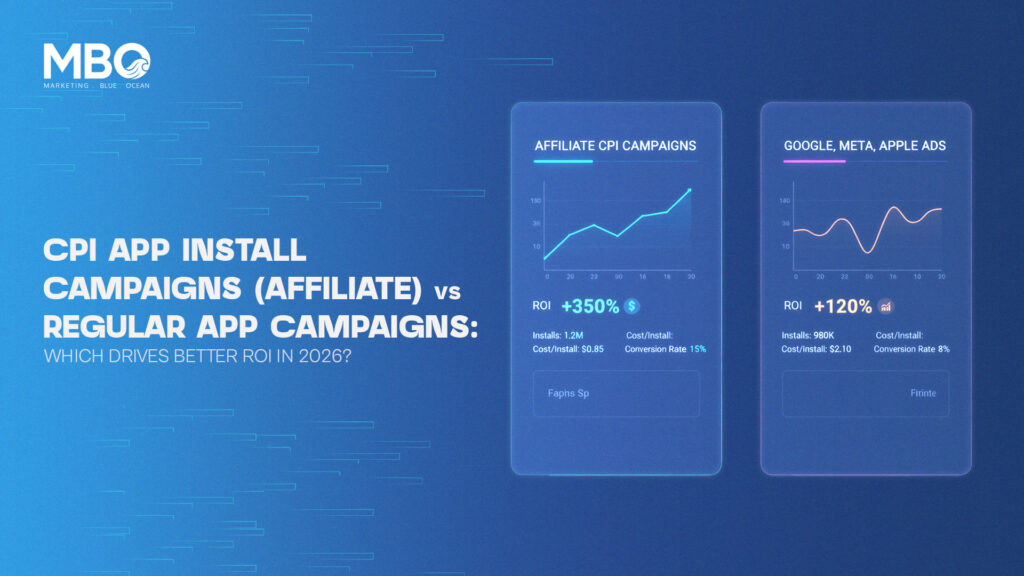
- The average global CPI via affiliate networks is $0.40 – $0.90 per install, while through Google/Meta campaigns, it’s $1.50 – $3.00.
- Retention rates for affiliate-driven users are 30–40% lower than for organic or platform-acquired users.
- Hybrid campaigns (mix of affiliate + Google/Meta) outperform single-channel strategies by 28% in ROAS.
- Fraud detection adoption increased by 50% across affiliate networks since 2023, reducing fake installs significantly.
These trends show that CPI App Install Campaigns are becoming more reliable, especially when combined with smart analytics and fraud prevention tools.
How to Optimize CPI App Install Campaigns for Better ROI
- Use Trusted Affiliate Networks: Partner only with verified CPI networks like AppSamurai, Yeahmobi, or Mobidea.
- Track Every Install: Integrate SDKs like Appsflyer, Adjust, or Branch for attribution and anti-fraud detection.
- Set GEO and Device Targeting: Narrow your audience to avoid irrelevant traffic.
- Test Multiple Creatives: Short videos, static banners, and playables perform differently per region.
- Analyze Post-Install Events: Focus on retention, sign-ups, or purchases instead of just installs.
How to Improve Regular App Install Campaigns
- Leverage App Event Optimization: Set goals like “add to cart” or “level completion” to improve LTV.
- Run Lookalike Audiences: On Meta Ads, use existing high-value users to find similar audiences.
- Combine Organic and Paid Efforts: Cross-promote through App Store Optimization (ASO).
- Use Deep Linking: Send users directly to relevant app content for higher conversion.
- Continuously A/B Test: Creatives, bids, and formats should evolve weekly.
The Future of CPI App Install Campaigns in the AI Era
AI is transforming both affiliate and platform-based campaigns. In 2026, networks are using machine learning to identify real human installs, predict lifetime value, and automatically block suspicious publishers.
On the other hand, Google’s AI-powered Performance Max for Apps and Meta’s Advantage+ App Campaigns are redefining user acquisition through predictive intent modeling.
The line between CPI App Install Campaigns and Regular App Campaigns is blurring, the future lies in automation, fraud-free installs, and LTV-focused optimization.
Conclusion: Which One Should You Choose in 2026?
In the ever-evolving world of mobile app marketing, there’s no single best method, success comes from balance. CPI App Install Campaigns (Affiliate) and Regular App Install Campaigns both bring unique strengths to your user acquisition strategy.
If your goal is fast, cost-effective growth, CPI App Install Campaigns offer massive reach and quick installs through affiliate networks. But if you’re aiming for long-term engagement, high retention, and real in-app value, Regular App Install Campaigns on Google, Meta, and Apple remain unbeatable for precision and quality. The smartest marketers in 2026 are no longer choosing one over the other, they’re combining both. By using affiliate CPI campaigns for volume and platform campaigns for engagement, brands can build powerful acquisition funnels that boost installs, visibility, and ROI.
In short, CPI App Install Campaigns aren’t replacing regular campaigns, they’re enhancing them. When used together, supported by AI optimization, fraud protection, and data analytics, every install counts toward a stronger, more profitable app growth strategy.
FAQs about CPI App Install Campaigns
1. What is a CPI App Install Campaign?
A CPI App Install Campaign is an advertising model where advertisers pay only when a user installs their app, making it a performance-based marketing strategy.
2. Are Affiliate CPI Campaigns Safe?
Yes, if you use verified networks with fraud protection and tracking tools like Appsflyer or Adjust. Always review publisher quality before scaling.
3. Which Is More Cost-Effective, CPI or Regular Campaigns?
CPI campaigns are cheaper per install but may have lower retention. Regular campaigns cost more but usually bring higher-value users.
4. Can I Combine Both Strategies?
Absolutely. Many top brands use hybrid app marketing, mixing affiliate CPI campaigns for volume with Google or Meta campaigns for quality.
5. What’s the Average CPI Rate in 2026?
Globally, affiliate CPI averages $0.40–$1.00, while Google/Meta campaigns range from $1.50–$3.00 depending on the category and region.