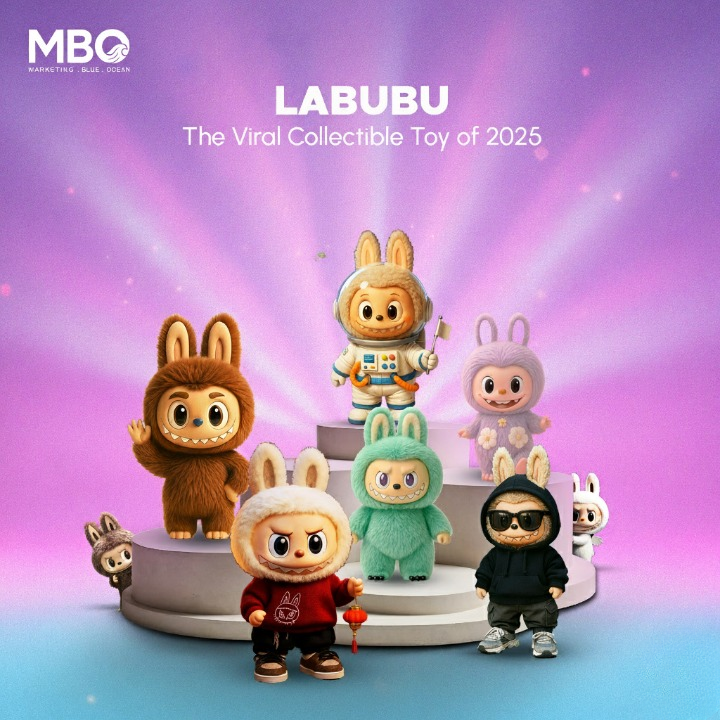
It’s 2025, and seriously, what is going on? There’s one tiny, sharp-toothed face you can’t escape, whether you’re scrolling TikTok, checking out the latest luxury runway, or hitting up an art gallery: Labubu.
This viral little collectible isn’t just a toy; it’s the defining cultural obsession for Gen Z, millennials, and basically anyone cool enough to know the difference between a Bearbrick and a KAWS. Everything about it, the eerie-cute vibe, the exclusive fashion drops, the digital domination, proves Labubu isn’t just a trend; it’s a global icon. Thanks to the brilliant mind of artist Kasing Lung and the marketing genius over at Pop Mart, this obscure fairytale character has blown up, turning into a billion-dollar powerhouse that owns global retail, social feeds, and design studios.
It started out as just a mischievous side character in Lung’s book, The Monsters, but it’s evolved into the must-have designer toy of the decade. Sure, the collectible world has seen its stars, but this year, it’s Labubu that’s the absolute epicenter of hype, breaking records and turning heads like it’s no big deal.
From Sketchpad to Stardom: The Labubu Origin Story
Labubu’s journey is actually pretty humble. It all started back in 2015 when Hong Kong-born, Netherlands-based illustrator Kasing Lung dropped his book, The Monsters. Among the crew was Labubu, a figure with wide, slightly unsettling eyes and a surprisingly endearing, sharp-toothed grin.
It was just one of many fantasy figures until Pop Mart, the Chinese toy titan, spotted its star potential. In 2019, they started producing Labubu figures as part of their famous blind box series. Think of it: a totally random, mystery collectible in every package! This element of surprise and scarcity, already massive in East Asia, was the perfect match for Labubu’s appeal, and it didn’t take long for the toys to become a phenomenon.
Fast-forward to 2025, and this little monster is a cultural powerhouse, showing up in everything from high-end fashion collaborations to NFTs. Why the obsession? The aesthetic, a perfect mashup of mischievous elf and slightly goth bunny, just hits for an audience that loves a mix of cuteness, irony, and total individuality.
The Blind Box Addiction: Pop Mart’s Genius Formula
You can’t talk about Labubu’s dominance without talking about Pop Mart. This company is a success story, pulling in $1.1 billion in annual revenue in 2023, with Labubu being one of their top money-makers.
The secret sauce? The blind box.
Every Labubu is a mystery! Most are common figures, but the ultra-rare, secret variants are the ones that create insane bidding wars and social media frenzies. This isn’t just selling a toy; it’s an emotional hook. It’s the ultimate psychological playground, tapping into FOMO, giving you a delicious dopamine hit when you unbox it, and fueling that primal collector’s need to finally complete the set. Fans aren’t just consumers; they’re collecting hunters.
The Lisa Effect: How BLACKPINK’s Star Made this tiny monster Go Absolutely Nuclear
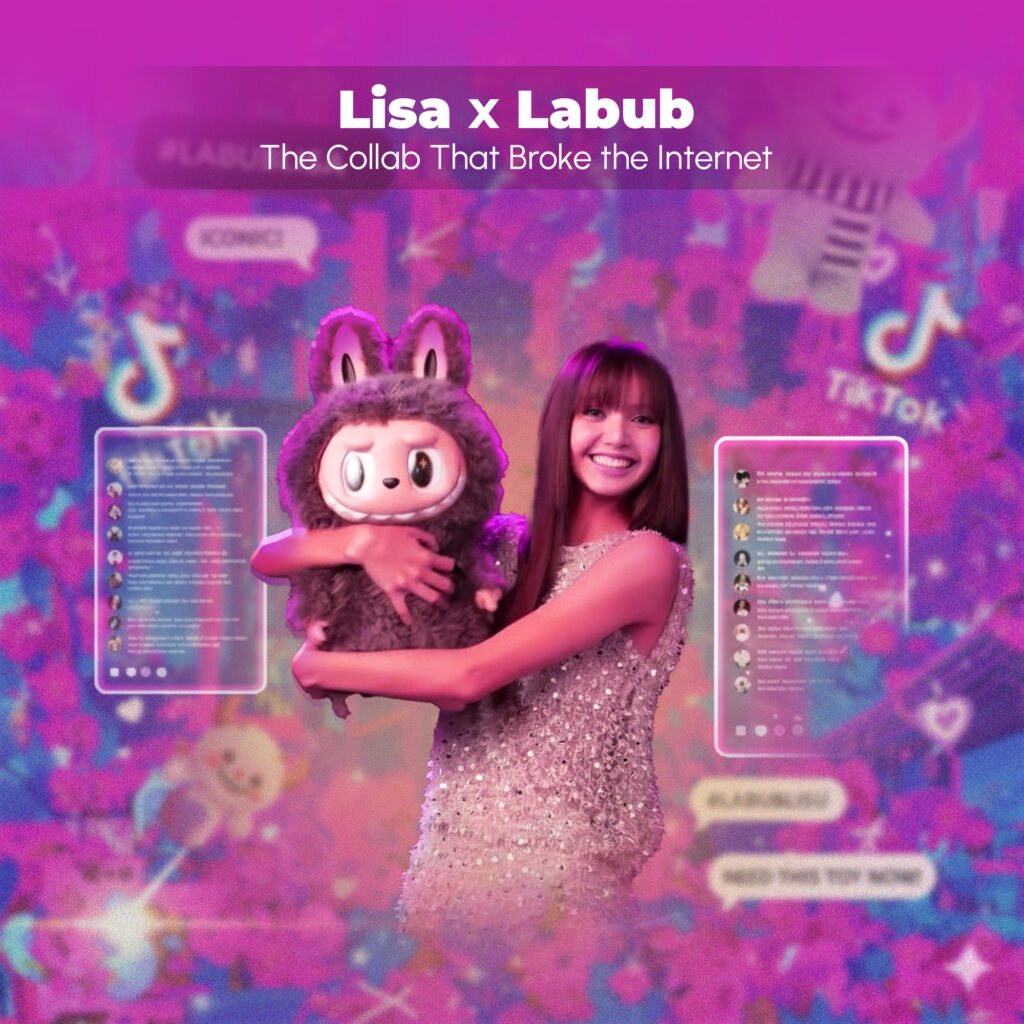
If you want to pinpoint the exact moment Labubu went from “popular collectible” to “global retail meltdown,” look no further than Lisa from BLACKPINK.
In 2023, the world watched as the global superstar was photographed holding a Labubu figure at a fan event. It was a single, casual moment, but it acted like a digital supernova. Once Lisa’s fans, and the rest of the fashion/pop culture world, saw that little monster in her hands, the game was over. Within hours, searches for Labubu went through the roof, pieces sold out instantly worldwide, and the collectible cemented its status as an A-list accessory. She wasn’t endorsing it, just playfully posing with it. But that was enough. Within hours, images circulated across social media, fan pages, and K-pop blogs. People wanted to know: “What is that toy Lisa is holding?”
That moment lit the match. Labubu-related searches surged overnight. Pop Mart’s website traffic jumped by over 300% in 24 hours. TikTok and Instagram exploded with Labubu unboxing videos and styling content. The toy quickly became a status symbol among Gen Z and K-pop fans, tying together the power of celebrity endorsement with viral organic content.
Soon after, Labubu started appearing in the arms of influencers, stylists, and celebrities across Asia, Europe, and the U.S. The buzz was no longer confined to collectors—it had gone full pop culture mainstream.
Labubu and the Hype Marketing Machine
Labubu’s rise can’t be explained without acknowledging the master-level hype marketing strategy executed by Pop Mart and its collaborators. This wasn’t an accidental trend — it was a perfectly engineered cultural storm. Much like the legendary drops from Supreme, Yeezy, or even limited-edition Nike releases, the brand thrives on artificial scarcity, tight-controlled releases, and community-driven excitement. Pop Mart understands one thing extremely well: people don’t just buy collectibles; they buy stories, status, and the thrill of belonging to a tribe. And that’s exactly where this little monster wins.
Here’s how the Hype marketing flywheel works for Labubu:
- Spark: The cycle begins with subtle tension-building moments, cryptic teasers, influencer leaks, behind-the-scenes hints, and surprise celebrity appearances. These micro-moments trigger curiosity long before a product even drops.
- Social Amplification: Once the buzz starts, the community takes over. Fans flood TikTok, Instagram, and Xiaohongshu with blind box unboxings, trade hauls, reactions, and collection showcases. This organic content becomes free advertising, multiplying reach without Pop Mart needing to say a word.
- Scarcity & FOMO: Drops are unpredictable, quantities are tiny, and restocks rarely happen. The result? Queues outside stores, online crashes, and collectors refreshing pages like their life depends on it. The fear of missing out becomes the strongest buying trigger.
- Secondary Craze: When supply dries up, the resale frenzy kicks in. Prices shoot up to 5x–10x the retail value, creating a gold-rush atmosphere. This secondary market madness tells new buyers, “If you don’t grab one now, you’ll pay much more later.”
- Cultural Lock-In: To keep the momentum alive, Pop Mart collaborates with artists, designers, and fashion labels. These crossovers boost credibility and ensure the character remains deeply woven into pop culture, not just as a toy, but as a lifestyle symbol.
This strategy creates more than hype. It creates ritual. People anticipate, chase, and celebrate their Labubu finds. It transforms a toy into an identity.
The Designer Toy Era: Why this tiny monster Isn’t Just a Toy
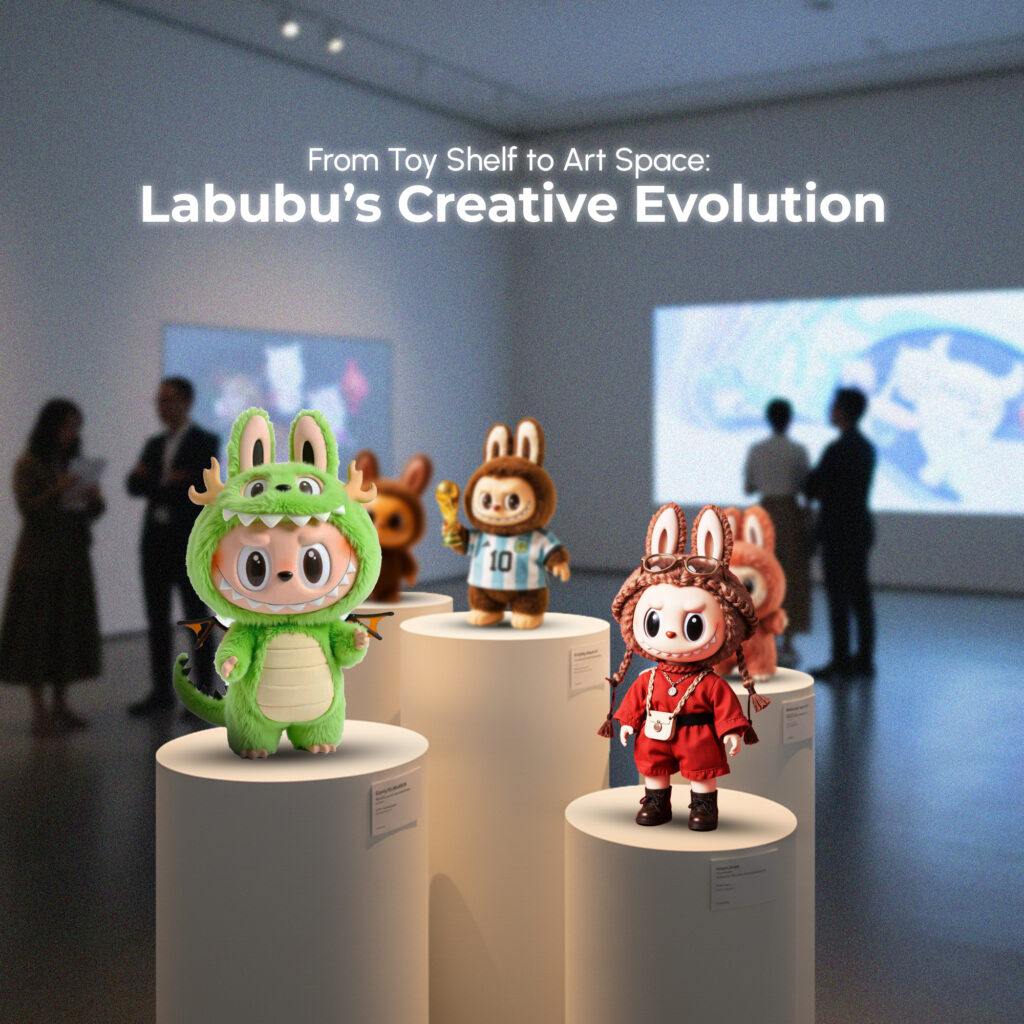
Labubu doesn’t belong on a toy shelf. It belongs in a display case, lit, styled, and perhaps even insured. The collectible is part of the designer collectible movement, where toys intersect with art, fashion, and status.
Collectors treat Labubu like sculpture. Interior designers use it as decor. Artists reinterpret it in paintings. The iconic figure is often placed alongside Bearbrick, KAWS, and Medicom figures. But what sets the little monster apart is its emotional depth. It’s not just cute, it’s oddly sad, rebellious, and expressive. It resonates with younger generations navigating a chaotic world. As one collector put it, “It feels like Labubu gets me.”
In 2025, Labubu figures are featured in modern art galleries in Tokyo, Seoul, and Paris. Limited-edition collaborations with artists like Hebru Brantley and Yusuke Hanai sold out in minutes. Pop Mart has also announced an NFT + physical twin series of the viral toy, bridging the digital-physical divide in collectibles.
Labubu in Fashion: The Must-Have Accessory of 2025
Labubu’s crossover into fashion is no accident. It’s a calculated move that taps into modern fashion’s obsession with nostalgia, collectibles, and cultural storytelling. Streetwear giants and luxury fashion houses are leaning into this character because it brings something brands crave: instant virality, emotional connection, and a built-in fandom that spends aggressively. Instead of treating it like a toy, the fashion world now sees it as an icon, a design element that adds personality, playfulness, and hype to their collections.
Here’s how some of the biggest names have woven the little monster into their aesthetic:
- Off-White pushed the boundaries by attaching playful character charms to limited-edition crossbody bags. The contrast between high-fashion minimalism and the quirky charm created a standout accessory that went viral on Instagram within hours of the drop.
- Balenciaga showcased Labubu-shaped zipper pulls during a 2025 runway look, blending avant-garde street luxury with collectible culture. It became one of the most photographed details of the show, proving how even a tiny design element can carry massive cultural weight.
- Dior is rumored to be developing a special art-toy capsule collection, merging high fashion silhouettes with collectible-inspired elements. If this collaboration happens, it could mark one of the biggest crossovers between luxury couture and toy culture.
- Vans released a limited sneaker featuring the character’s silhouette, complete with glow-in-the-dark soles. The design became an instant hit among both sneakerheads and collectors, creating long queues in stores and sparking resale hype within days.
From clothing patches to bag charms to full-blown Labubu-themed editorials, the figure’s design versatility makes it an icon of wearable irony, cute but unsettling, nostalgic yet new. For Gen Z, it’s more than a fashion statement. It’s a flex that screams “I get culture.”
The Global Labubu Craze: From China to the World
Though Labubu was born in Asia, it has gone fully global. Pop Mart has opened flagship stores in New York, London, Dubai, and Sydney. In 2024 alone, over 75 million Labubu figures were sold worldwide. The U.S. and Middle East have seen massive adoption, with limited drops leading to queues wrapping around entire blocks.
Online communities like Reddit’s r/LabubuCollectors, TikTok fan pages, and Discord trade groups are thriving ecosystems. Pop Mart’s mobile app also logs over 12 million active users monthly, with many engaged in Labubu-related activities.
In Japan, Labubu cafes offer themed desserts and merchandise. In Singapore, an entire art exhibit was dedicated to the evolution of Labubu’s design. The viral collectible toy is now a cultural ambassador, a brand in itself.
Labubu’s Role in Art and Contemporary Design
It’s not just the fashion world that has fallen for Labubu. Art institutions are taking notice, too.
In early 2025, the Shanghai Museum of Contemporary Art curated an exhibition titled “Toys as Cultural Objects”, where this tiny monster was showcased alongside works by Takashi Murakami and KAWS. Labubu sculptures, paintings, and augmented reality installations attracted global attention.
Several independent artists now reinterpret Labubu in their own styles. Sculptors create marble Labubus. Graffiti artists add Labubu to murals. NFT creators build digital twins. Labubu has transcended medium and market. It’s become a muse.
A Deep Psychological Pull: Why Fans Can’t Get Enough of the viral toy
Labubu strikes at something far deeper than aesthetics, it taps into emotion, identity, and the human need for connection. Its expressive face, that slightly unsettling smile, and the lonely yet mischievous stance create an emotional cocktail that feels strangely familiar. There’s nostalgia in its eyes, vulnerability in its posture, and an unfiltered weirdness that resonates with people who no longer feel represented by polished, perfect characters.
In a world where social media over-represents flawless beauty and curated lifestyles, this odd little figure feels refreshingly honest. It mirrors the contradictions many young people carry within themselves: joy mixed with anxiety, confidence tangled with self-doubt, rebellion coexisting with the desire to belong. Labubu is imperfect, and that imperfection makes it relatable.
This viral character also speaks to a broader generational shift. Younger audiences are gravitating toward things that feel “real,” raw, and emotionally complex. Instead of picture-perfect mascots, they’re drawn to characters that reflect their inner chaos in a fun, harmless way. It becomes a symbol of self-expression, a way of saying, “I’m different, and that’s okay.”
Owning one isn’t just about having a collectible on a shelf. It’s about being part of a subculture that values individuality, creativity, and emotional storytelling. For many fans, displaying it is a badge of identity, a tiny reminder that they’re allowed to be strange, expressive, and unapologetically themselves.
The Psychology Behind the Obsession
Why does Labubu trigger such an intense, almost unstoppable frenzy? It’s not just hype or clever marketing, psychologists point to deeper behavioral triggers that make people feel emotionally connected and even addicted to the experience surrounding this character.
Psychologists point to a few key factors:
- Surprise: The blind box strategy plays directly into the human reward system. Every purchase feels like a mini–adrenaline rush, a gamble wrapped in cute packaging. That moment of uncertainty activates the brain’s dopamine pathways, making fans want “just one more try.” It’s the same psychological mechanism behind slot machines and loot boxes.
- Belonging: In a world where loneliness is rising and online identity means everything, belonging to a fan community offers comfort. Labubu collectors share inside jokes, trade rare pieces, and bond over the thrill of the hunt. For many, the community is just as valuable as the collectible itself, it creates a sense of identity, connection, and shared culture.
- Scarcity: Limited drops trigger a primal reaction: the fear of missing out. When people feel something is rare, they assign it higher emotional and financial value. Owning a piece instantly becomes a status symbol, not because it’s expensive, but because not everyone can get it. This scarcity-based prestige fuels desire, competition, and resale chaos.
- Emotional resonance: This character’s expressive face does something special, it mirrors the emotional complexity of modern life. The mix of cuteness, sadness, weirdness, and mischief makes it strangely relatable. Fans see a bit of themselves in its design, which creates a surprisingly deep emotional connection.
Put together, these psychological forces turn the collectible into something much bigger than a toy. It becomes a mirror, reflecting the hopes, anxieties, dreams, and inner personalities of the people who own it. That’s why the obsession feels so personal. It’s not just a purchase; it’s a piece of identity.
FAQs
What is Labubu?
Labubu is the hottest designer collectible character right now! It was created by the artist Kasing Lung, and it first showed up in his book, The Monsters. Pop Mart produces it, and it’s famous for its super-expressive, mischievous little face and the fact that it completely blew up the blind box scene.
Why is Labubu so popular in 2025?
This character has captured the attention of global audiences due to its emotional design, celebrity exposure (especially from BLACKPINK’s Lisa), and Pop Mart’s hype-driven marketing strategy. It’s fashionable, artistic, and collectible.
How much revenue does Labubu generate?
This little monster isn’t just a fun toy; it’s a massive financial engine for Pop Mart. It is consistently one of their top-selling stars! In 2024, It’s merch was a huge reason Pop Mart pulled in a mind-blowing $1.1 billion in total revenue. We’re talking millions of figures sold worldwide, and the frenzy is so intense that people on the resale market are flipping them for 5 to 10 times the original price! It’s not just collecting; it’s an investment.
Where can I buy the little monster collectibles?
These toys can be purchased from Pop Mart flagship stores, official websites, and licensed online retailers. Rare figures are commonly traded on platforms like StockX, eBay, and local collector groups.
Is Labubu a boy or a girl?
The character’s gender is intentionally ambiguous. Some editions portray Labubu with feminine features, while others keep it neutral. The creator and fans celebrate this flexibility as part of its charm.
Conclusion:
In 2025, Labubu is more than just a vinyl figure. It’s a social statement, a collectible obsession, a fashion accessory, and a digital-age icon. Its journey, from fantasy book character to billion-dollar collectible empire, is a case study in creative storytelling, genius marketing, and emotional design.
This tiny monster influence touches fashion, art, and social media. It resonates across generations and cultures. It symbolizes modern identity: complex, layered, playful, and ironic.
So, whether you see it in a fashion editorial, on your friend’s Instagram shelf, or peeking from a TikTok haul, know that Labubu isn’t just a toy.
It’s the viral collectible toy defining pop culture in 2025.