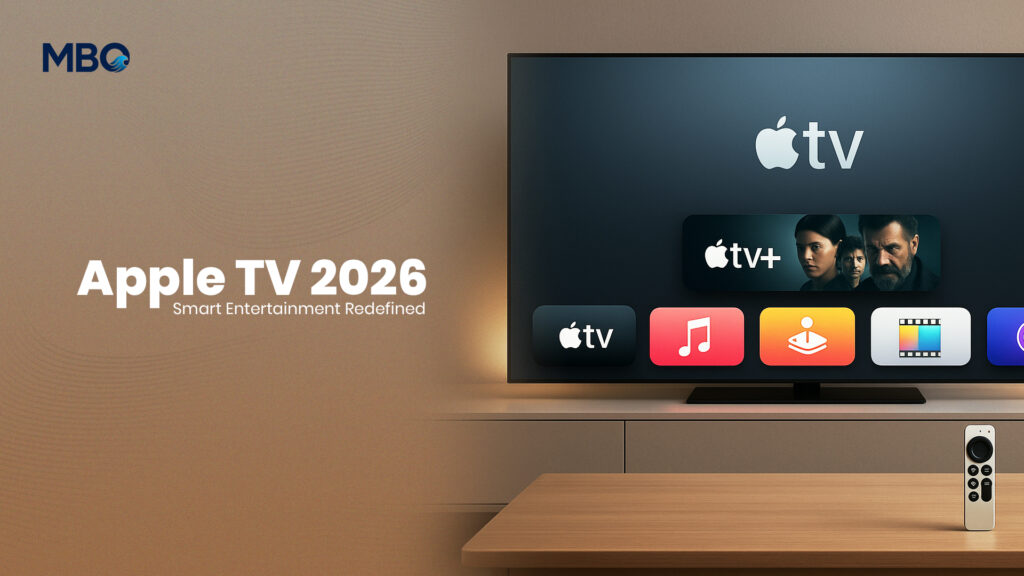
By 2026, Apple TV isn’t just another black box under your television. It’s become something bigger, a centerpiece that ties together Apple’s entertainment, smart home, and personal tech ecosystem. What started as a simple streaming device has quietly evolved into a powerful home hub that blends storytelling, convenience, and technology in a way few competitors can match.
Today, Apple TV is less of a device and more of a lifestyle engine. It’s the thing that brings your content, your family, and your smart home together, wrapped in Apple’s familiar blend of simplicity, privacy, and polish. Few competitors have managed to match that combination.
From a Streaming Box to a Connected Experience
When the first Apple TV launched years ago, it was mainly a way to rent iTunes movies on a bigger screen. Fast-forward to today, and the 2026 Apple TV 4K feels like a completely different animal. It’s fast, sharp, and deeply integrated with the rest of Apple’s world, your iPhone, iPad, Mac, HomePod, and even your Apple Watch.
The new Unified Control Center makes switching between apps like Apple TV+, Netflix, Disney+, and YouTube surprisingly seamless. Apple’s AI quietly learns what you like to watch across all your devices, so your next show or movie recommendation actually makes sense for once. It’s subtle, but it works, you can tell this isn’t just another algorithm guessing blindly.
Apple TV+ and the Power of Storytelling
Apple TV+ is still the soul of the platform. What began as a small, uncertain venture into original programming has grown into a storytelling powerhouse. By 2026, Apple TV+ is competing head-to-head with Netflix and Amazon Prime Video, not through quantity, but through quality.
Shows like Severance, Silo, and Masters of the Air have helped Apple carve out a reputation for cinematic, emotionally rich storytelling. The platform’s 150 million subscribers might not sound massive compared to Netflix’s numbers, but Apple’s focus is clear: fewer titles, higher quality, and a more curated experience.
Living Seamlessly Inside the Apple Ecosystem
Apple’s real magic is in the way its devices talk to each other. You can start watching a show on your iPhone during your commute, then finish it later on your Apple TV without missing a second. Family Sharing gives everyone their own profiles and recommendations, and FaceTime on Apple TV (a surprisingly delightful addition) brings people together in a big-screen, living-room setting.
Family Sharing is another underrated gem. Each family member gets separate profiles, personalized recommendations, and their own watch history, no more kids’ cartoons messing up your suggested content.
If you’ve got smart lights, thermostats, or blinds that support HomeKit, Apple TV becomes your home’s quiet conductor. A simple “Hey Siri, movie time” command can dim the lights, lower the blinds, and start your next episode, no remotes, no fumbling.
The Smart Home and Privacy Balance
Apple TV has grown into the heart of Apple’s smart home strategy. With HomeKit, Matter, and Thread support, the 2026 Apple TV serves as a secure home hub, controlling everything from thermostats to smart lights to motion sensors.
The difference between Apple and its competitors is Apple’s stance on privacy. Where other companies are often caught dipping into user data to fuel ads or targeted suggestions, Apple markets privacy as a feature, and with Apple TV, that philosophy is front and center. Your footage, your voice commands, your home activity… all of it stays encrypted and private.
The downside? Apple’s ecosystem can feel like a beautiful but closed garden. It works unbelievably well if you use Apple devices everywhere. But if you’re split between platforms, you’ll miss out on many of its best features.
Beyond Streaming: Fitness, Gaming, and More
The beauty of Apple TV lies in how much it does beyond entertainment.
Apple Fitness+
Fitness+ turns your living room into a personal workout studio. Trainers appear on your TV, your Apple Watch shows live metrics, and Apple TV syncs everything in real-time. It feels personal, advanced, and intuitive, especially with the 2026 updates that let you customize training intensity and track form improvements.
Apple Arcade
With the A15 Bionic chip inside the newer Apple TV 4K, the device handles most Apple Arcade games beautifully. It’s not a PlayStation 5 or Xbox Series X competitor, but for casual gaming, party games, and family-friendly titles, it’s more than enough.
AirPlay + Music
You can turn your Apple TV into a giant music visualizer, streaming your playlist from your iPhone or Mac. The experience feels clean and immersive, especially with Dolby Atmos and paired HomePod speakers.
All these pieces make Apple TV feel like a flexible device, not just for watching shows, but for living your digital life in your living room.
How It Stacks Up Against the Competition
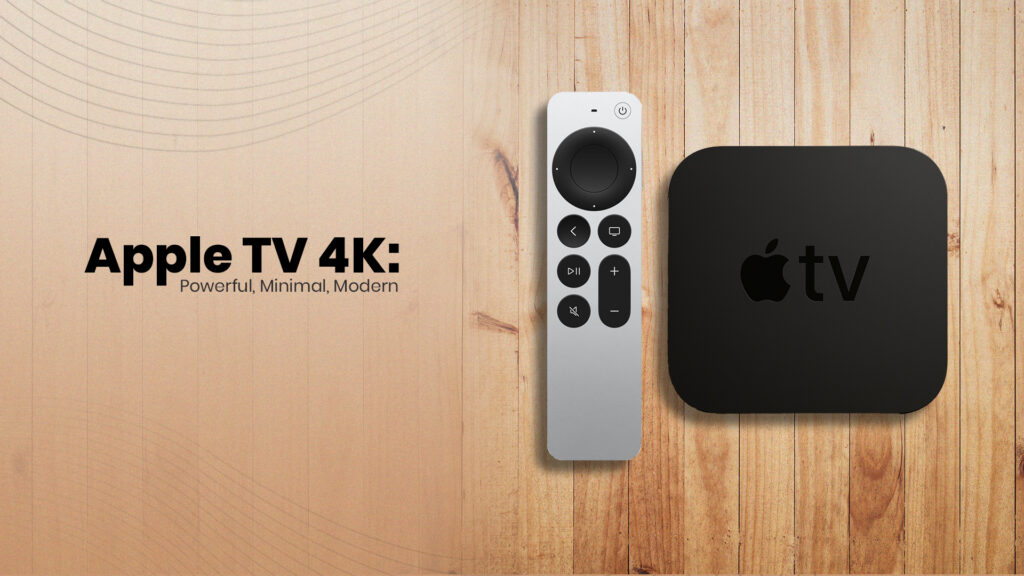
It’s no secret: Apple TV is expensive compared to Amazon Fire Stick, Roku, or Google TV. And Apple knows it. Those cheaper devices are great for basic streaming, and for many people, they’re perfectly fine.
But Apple isn’t trying to compete on price. Their pitch is different:
- longer device life
- no ads cluttering the interface
- privacy-first design
- seamless integrations
- regular software updates
- premium performance
- elevated content quality
People who want a simple streaming stick may look elsewhere. But people who care about design, privacy, and long-term value usually find Apple TV worth every rupee.
Looking Ahead: AI, AR, and the Future of Storytelling
Apple’s next frontier seems to be interactive and immersive storytelling. With the Vision Pro headset now part of the ecosystem, Apple is hinting at a future where Apple TV+ shows might live in augmented reality, where you could literally step inside a scene or change the course of a story with your voice.
It’s ambitious and still a few years away, but if anyone can blend technology and storytelling seamlessly, it’s Apple.
Conclusion
In 2026, Apple TV is no longer just a box that plays videos. It has become a lifestyle centerpiece, streaming, gaming, fitness, automation, and family connection all wrapped into one polished ecosystem.
It’s not the cheapest option, and it’s not perfect. The ecosystem can feel limiting if you’re not fully invested in Apple devices. But what Apple TV offers is consistency, elegance, and a sense of intentional design that stands out in a world full of cluttered interfaces and ad-filled platforms.
In a sea of plastic dongles and chaotic menus, Apple TV still feels premium. It reminds you what entertainment can feel like when hardware, software, and storytelling come together seamlessly. If your home already runs on Apple products, Apple TV isn’t just an add-on, it’s the natural heart of your digital life.